
Operationalizing soil persistence
Why focus on soil persistence and how to measure it

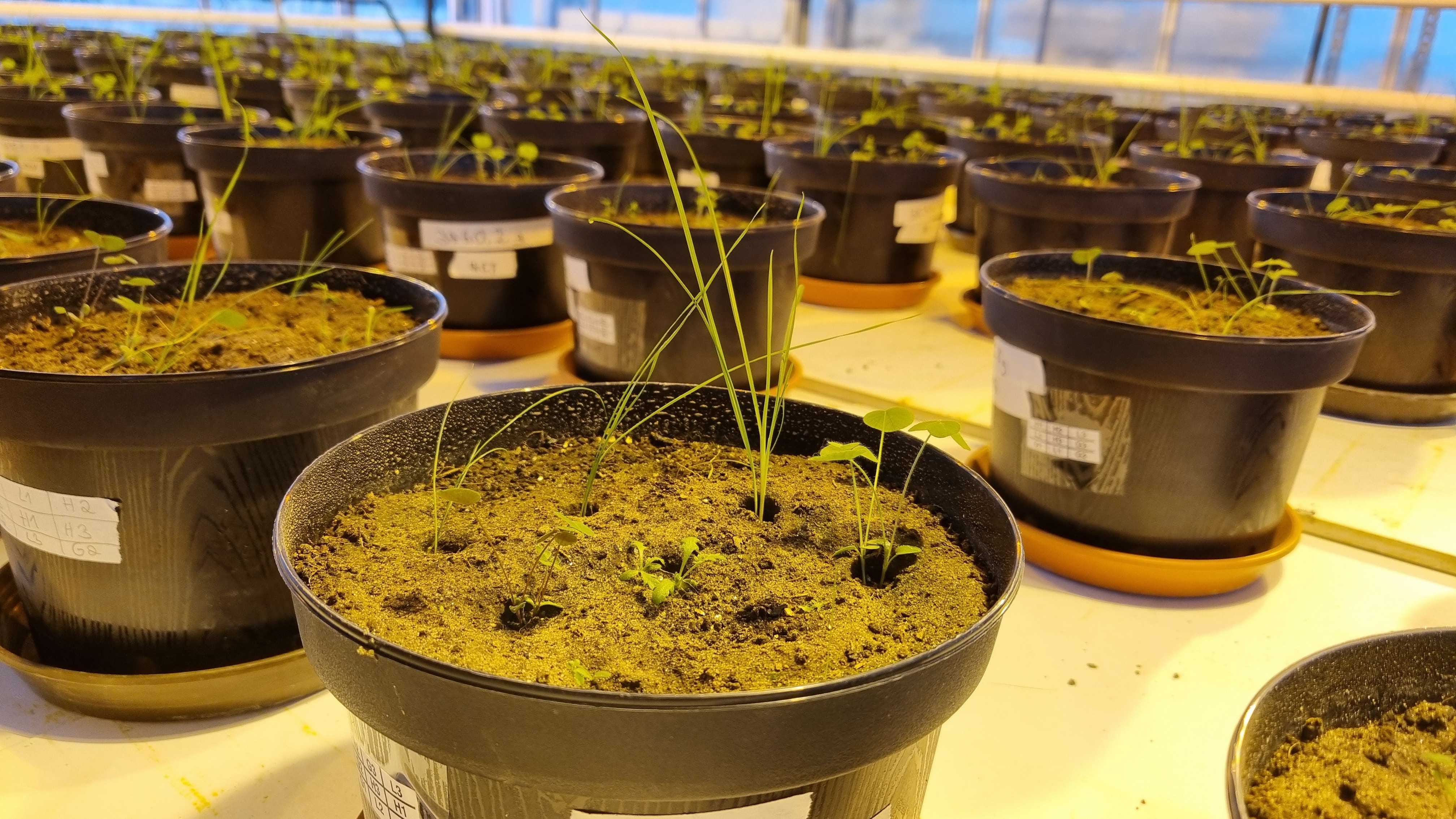
In 2024 I wrote a substack about the idea of soil persistence and the role of mycorrhiza in this persistence. There will shortly be a paper coming out where I introduce the idea of soils having been there before plants, together with paleontologist Christine Strullu-Derrien. The idea of that paper is to turn things upside down, so to speak, and to think about the soil first, and then the plants.
What arises from that thought is that perhaps the ‘goal’ of soil is simply to persist. What is a soil? I mean an individual soil? Not so easy to find an answer, I think. I define it as the confluence of weathering minerals, air, water, organic matter (necromass), and biota. I don’t include plants and I don’t include horizons. This means, a soil could be just a few cubic centimeters or even smaller.
These are all still thoughts in the process of being straightened out and refined. But the idea in the raw, and highly anthropomorphized, is this: soil as an entity has the goal to persist. Of course, plants are great for that, since they feed it a reliable supply of carbon via litter and rhizodeposition, and they protect its surface by reducing the impact of rain and wind. But there are many other factors as well that contribute to persistence, for example microbes that aggregate and stabilize soil, including mycorrhizal fungi. Coincidentally (?) they were already there in our first record of soils over 400 million years ago.
This is just a way to view the world, and I don’t think this idea can be falsified or tested, and it is not necessary to adopt this view (i.e. it is not normative), similar to the ITSNTS (it’s the song not the singer) theory. But if this idea leads to new questions, then I believe it is an interesting avenue to pursue. And then the new focus is on measuring soil persistence. Theoretical considerations aside, persistence of soils is of course also highly relevant from a more applied side, for example thinking about soil health or sustainability.
How can we operationalize soil persistence, for experimental purposes, in other words: what can we actually measure in the lab, following an experiment, to indicate soil persistence? So I am not talking about soil persistence in terms of observational data, where we talk about decades to centuries, but about more immediate readouts that we can do in our experiments.
How does a soil disappear: via erosion. So I immediately think of soil aggregate stability as a key parameter, since this provides erosion resistance. Certainly this needs to be a major response variable in all discussions of soil persistence. And all things related to this, like the production of cementing agents, perhaps water repellency and so on. But also the direct measurement of erosion rates in an experimental setting; we rarely do this.
But there are other consequences: we could ask what plant traits are most important for soil persistence. Or which microbial traits or communities.
Of course persistence could probably be defined in all kinds of ways, also in terms of functional persistence, so to speak. If a soil is strongly impeded in many process rates or has lost much of its biodiversity, perhaps it can be functionally regarded as lost or on a trajectory towards loss. And these parameters are likely strongly related to physical loss of soil by erosion. Speaking of trajectory, maybe a very important tool for assessing persistence will be time course data.
This kind of work would be at its most interesting if soil functioning in the sense we assess it today (like enzymatic rates, decomposition rates, provision of nutrients to plants) is actually at odds with persistence.
Perhaps there is even another side to this we should consider, the flip side of soil loss: the formation of soil. Not so sure how we could operationalize this in an experiment, perhaps through measuring mineral weathering. Which parameters, processes or biota increase soil formation rate?
What do you think about this idea and how to operationalize it? Let me know in the comments, currently drafting a paper on this! :)
This is curious and interesting, therefore I will comment with questions, if that's OK? I mean to ask these in a critical way, not in a disagreeing way! I've just finished applying for a job so I am in an odd brain space right now!
My first question is why do you choose the word 'goal'? I realise you put it in inverted commas indicating a level of uncertainty/ not-quite-the-right-term, but is it OUR goal that soil persists, not soils' goal?
Next thought, if soil is eroded, it does not 'disappear' it is just re-placed somewhere else. If the soil is at the bottom of a slope, does it not require the top of the slope to persist? In a similar vein, is the top of a mountain therefore anti-persistence? Is there spatial persistence? Temporal persistence? What about persistence between seasons? Biotic persistence? Some other dimension of persistence we don't understand?
What about peat soils (those pesky peats!!)? Persistence as you approach it would only apply to mineral soils.
Why do you include 'biota', but not plants? Are you proposing that soil needs biota but not plants? What about lichens and mosses and the like as first responders to exposed rock? They are certainly persistent photosynthesisers. Are you proposing a biota hierarchy of persistence?
I'll keep my own opinions about aggregate stability to myself (!), but considering pore structure, is having a 'persistent' pore structure actually desirable? Same goes for aggregate stability. Surely an aspect of soil is that it is dynamic and it 'turns over'? (Is there dynamic persistence I wonder?)
What is the relationship/divergence of persistence to resilience?
Don't feel you have to answer any/all these questions, but thought they might help you explore the idea further!
I remain skeptical of the idea that soil has a 'goal.' OTOH, I am attracted to the notion that soil represents a complex system of component parts (physical, chemical, and biological) and that these parts interact in ways that result in negative feedback loops (stabilizing) or positive feedback loops (often destabilizing)